About a decade ago, as the American craft beer business was booming, the cigar industry began copying what was becoming a common trend for breweries. Barrel-aging. I kid, sort of.
No, instead, cigar companies kept talking about “collaborations.” Needless to say, I quickly turned into a 20-something curmudgeon about the topic. Each time we’d get a press release about a new “collaboration,” I’d ask the same question: how is this any different from being a client brand?
The hand-made cigar industry is unique in many ways, but one of them is that there are many client brand relationships—when one company produces cigars for another—and yet, the company producing the product is also selling cigars of its own to the same retailers and consumers. The list of companies and the intertangled webs is lengthy, multi-national and never-ending. For example, Plasencia makes cigars for a laundry list of companies that have their own factories, including big names like Altadis U.S.A. and Rocky Patel. When Altadis U.S.A. contracts Plasencia to make a new Montecristo, is that a collaboration or a client brand relationship? I would argue it’s almost always the latter.
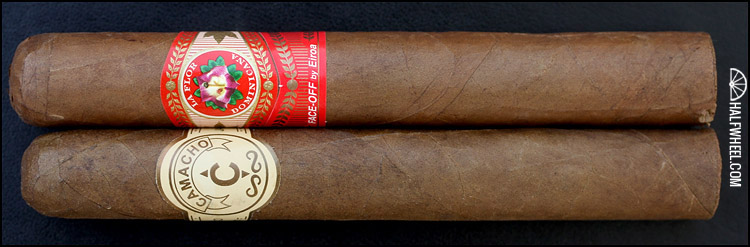
There have been a few incredibly unique collaborations, perhaps most notably Face Off. In 2003, Christian Eiroa, whose family owned Camacho at the time, and Litto Gomez of La Flor Dominicana sent tobacco they grew to the other: meaning Eiroa sent Honduran leaves to the Dominican Republic, while Gomez sent his tobacco back west to Honduras. They each blended their own cigar, which were banded with the other company’s branding, meaning La Flor Dominicana made a Camacho and perhaps more interestingly, there was a La Flor Dominicana made in Honduras.
If I had to pick one company for Tatuaje to collaborate with, My Father would not be the company I would choose since, nearly every single Tatuaje ever made has been produced by the García family that owns My Father. However, in celebration of 20 years of working together, that’s exactly what the two companies did. It’s a project called La Union, which was introduced in 2023, the year that marked the two decades. And while I wouldn’t consider most Tatuajes to be a collaboration with My Father, I do think La Union fits the bill.
When it was announced, the companies said there would be a two-part release. There would be two different boxes, marketed as humidors, that would each contain two different cigars: one blended by Jaime García of My Father for Tatuaje, another blended by Pete Johnson of Tatuaje for My Father.
The first two cigars came out in early 2024, the La Union Black Humidor.
Note: The following shows the various La Union cigars. Some of these cigars may have been released after this post was originally published. The list was last updated on Nov. 14, 2025.

83
Overall Score
For different reasons, the first thirds of each cigar were far and away the most enjoyable part of these La Union — My Father para Tatuaje Red Humidor cigars. Had I been asked to write predictive thoughts after completing the first third of the first cigar, I would not have guessed what was coming. Whereas that section showed a unique, albeit slightly simplistic flavor profile and great ash formation, what came after were many moments of witnessing the cigars fall just short of executing the basics without issues, i.e. staying lit and delivering the flavor profile without issues. Even excluding the tar-ridden cigar, the other two cigars left a lot to be desired to as far as the price-to-performance ratio. Fortunately for these three cigars, our scoresheet neither factors in price nor tar.
A couple of months ago, the second part arrived: the La Union Red Humidor. While the boxes are different colors, the two humidors share a lot in common. Each comes with 40 cigars that measure 7 1/4 x 50 and feature a 109-style cap; there are 20 of each blend. Each box also contains a branded XIKAR Perfect Xi1 cutter. Notably, the two humidors don’t contain the same cigars.
For the La Union Red Humidor, the My Father blend uses a Connecticut broadleaf wrapper over a Nicaraguan binder and fillers. For context, the La Union Black Humidor García-blended cigar uses an Ecuadorian habano wrapper over a Nicaraguan binder and fillers from Nicaragua.
The other cigar in the La Union Red humidor, the one blended by Johnson, uses an Ecuadorian Sumatra-seed wrapper over a Nicaraguan binder and filler. You can tell the two cigars apart by their secondary bands—the Johnson-blended cigar says “For My Father’, while the García-blended cigar has a band that says “Para Tatuaje”—and that the Johnson-blended cigar has a covered foot.

- Cigar Reviewed: La Union — My Father para Tatuaje (Red Humidor)
- Country of Origin: Nicaragua
- Factory: My Father Cigars S.A.
- Wrapper: U.S.A. (Connecticut Broadleaf)
- Binder: Nicaragua
- Filler: Nicaragua
- Length: 7 1/4 Inches
- Ring Gauge: 50
- Shape: Round
- MSRP: $60 (Box of 40, $2,400)*
- Release Date: September 2025
- Number of Cigars Released: 1,500 Boxes of 40 Cigars (60,000 Total Cigars)*
- Number of Cigars Smoked For Review: 3
*A box contains 20 cigars of each blend.
While this is a long cigar, there’s a lot of packaging. A main band, a secondary band and a ribbon foot band are not that uncommon, but the detail elements on the main band especially, are way above standard. With the bands removed, the broadleaf wrapper is luscious-looking, but not without some imperfections. There are a few different multiple inch-long veins, each of which seems to have one gnarly spot where the vein will either curl around itself or, in one case, create a split in the wrapper. These are big cigars that have big aromas off the wrapper: full with lots of perfume-like scents joined by a strong scent that reminds me of sarsaparilla and milk chocolate. It’s strong, sweet and intense, so much so that the first cigar almost smells flavored, though the second cigar is probably medium-full as some chemical flavors seem to slightly mute the sweeter flavors. The first cigar has a similar smell from the foot: dense and sweet with a bit more acidity and some toastiness. The second and third are not as intense, though still quite full. The second is more acidic, though the third smells a bit like paint. Cold draws are dense and rich, though more medium-full. The first two cigars are similar: milk chocolate, permanent marker, barrel notes, granola, dark earth and some aloe. The third cigar starts with a super sharp first cold draw, though it’s not present on any of the cold draws after that. In its wake is permanent marker, raisin sweetness and a subtle flavor that reminds me of when I accidentally ate Bavarian sausage casing, i.e. intestine. It too is medium-full, though the resistance is somewhat open.
Each La Union — My Father para Tatuaje shares some of the same basic traits: medium-full, rich earthiness and slightly sweet, though the individual flavors are quite a bit different. The first cigar starts like the end of a cookout: woody, burnt meats and Montreal seasoning. The second cigar swaps out the wood for more of a charcoal flavor, though it has creaminess, which completely changes things. The third cigar is the lightest of the bunch, thanks to more white pepper, leather and saltines, though the core profile is similar to the other two cigars. The first cigar doesn’t change much from its first puff: lots of barrel notes are joined by a dark earth and a consistent black pepper. While the other two have those flavors, they are joined by some cracker flavors—at times plain, other times more salted—frothed milk and some less burnt earthiness. During the finishes, each cigar gets drier and spicier, with cinnamon being the only real new flavor. Retrohales are smoother and bring out more of the cracker and creamy flavors. Here, it’s more of a salted cracker flavor along with some oregano and muddy earth. As the finish develops, that transitions into more of a medium roast coffee with pecan being the highlight. Flavor is medium-full or full, body is medium-full and strength is medium-plus. The first cigar’s draw is tighter than I’d like it to be, so much so that I end up making a second cut about 15 minutes in. That helps a bit, but it seems like the issue is related to a twist in the bunch and not me misjudging how much to cut off. Beyond that, I don’t have any construction issues in the first third, but each cigar’s draw could be better.

The first cigar seems rather intent on just staying the same. And while I didn’t know it at the time, that’s more than fine. Comparing my notes between the first and second thirds of that cigar, I’m finding slightly more bread and cracker flavors, but I’d still describe it mostly as a dark earth profile. The third cigar is not static; instead, it’s saltier due to some pistachios and isolated salt, though I also get a very sharp burn on the upper. The finish of each cigar is a lot smoother with acorns, leather, white pepper and vegetable stock dampening things. Retrohaling delivers a mixture of dry fall leaves and medium roast coffee with secondary notes of brown rice, creaminess, salty sunflower seeds and white pepper. The third cigar is sweeter, with some retrohales delivering just creaminess and a touch of floral sweetness, a nice contrast to the dark earth flavor. During the finish, the starchy rice and white pepper flavors outlast most other things; my notes don’t show any new flavors. Not mentioned in all of that is the second cigar, which has some of those flavors but also has tar. I can taste it—which I don’t really mind—and I can see it—which I definitely mind—but more than anything, there’s so much tar that it’s messing with the draw. More on all of that below. Flavor is full, body is medium-full and strength is medium-full in the first cigar, medium-plus in the second and full for the third. Multiple touch-ups are required for each cigar, with the first two having noticeably worse issues—both in frequency and severity—compared to the third cigar.

If I were smoking this cigar blindfolded, I wouldn’t have been able to tell that the first La Union — My Father para Tatuaje has transitioned, at least not flavor-wise. The saltiness increases, but it’s still a lot of burnt and dry earth flavors paired with barrel notes and some subtle sweetness. In many ways, that’s what my notes of the third cigar show, though it’s less burnt and I find some pepperoni flavors that liven things up. Where I can’t find much difference is during the finish: it’s saltier and the earth gets less dry, though other than more black pepper than white pepper, it’s just not that different. Retrohales are lighter with nuttiness, creaminess and starchy bread over a mixture of white and black pepper. Flavor is full, body is medium-full and strength is medium-full or full. The first cigar is able to burn through the final third without any issue, though the other two cigars continue to struggle with uneven burn lines that are significant enough for me to need to touch them up.

Final Notes
- During the second half of the first cigar, I felt like I was sometimes tasting tar, but I didn’t see any signs of it. To me, the tar flavor is a bit of a combination of black tea, the menthol flavor of an amaro, and fond—none of which sounds bad. Unfortunately, it’s paired with metallic, salty and bitter aspects. It’s not a great flavor.

- If you are wondering if you are experiencing it, there’s one very easy way to tell: look for a dark brown and sticky substance emanating from the cap. Just wipe your finger or a napkin across the cut part of the cigar and you’ll know if there’s tar. The second La Union was one of the worst examples in recent memory, with so much tar that it took multiple swipes to wipe away the substance.
- I have been told by cigar makers that tar is often a result of how the tobacco is processed, though I typically find it when the draw is tight. When it happens to me, I typically try to cut off the very end of the cigar which will sometimes help but usually only for 15 or 20 minutes. In the case of the second cigar, the tar ran deeper into the cigar.
- Our scoring sheet doesn’t specifically penalize a cigar for having tar, meaning it’s not an automatic point deduction. That said, the tar rarely helps the flavor and construction aspects that we are scoring.
- Before I noticed the taste or visible signs of the tar, I felt a very weird situation with the draw. There was a blockage near the cap, but I could squeeze the top of the cigar and move it around, which would sometimes open the draw enough to get a good puff. I suspect that what was happening was me moving around the sticky substance. If a 5/10 is a perfect draw, the draw was yo-yoing between a three (open) and an eight (pretty tight).
- Despite having persistent issues with uneven burns, the ash was very pretty when it was even.

- There are so many details in the main band; I’m a big fan of the black filament on the bottom of the band. The main concept is interesting as the top of the band has a classic My Father design with a pale pink background and gold accents, whereas the bottom of the band has Tatuaje’s brown with its logo.
- Per Patrick Lagreid: The primary band has the initials E.R.H. and two dates on the right side. E.R.H. is an acronym for El Rey de los Habanos, the Garcia family’s factory that was in Miami’s Calle Ocho. That’s the factory where Tatuaje got its start. The first date, 5-20-2003, is a reference to when the factory was incorporated, while the second date, 10-22-2003, is accompanied by another number, 29, which Johnson told me related to a particular invoice related to his products. The inside of the bands have 2003 on the top band and 2023 on the bottom band.
- The logo for this release features three hands: Jaime García and Johnson are shaking hands, while José “Pepín” García’s hand is on top. Pepín is the father of Jaime and Janny García, i.e. the father in My Father.
- I haven’t seen one of the Red boxes in person, but assuming they are identical to the Black Humidor, that means they are glossy, wide and ornate. Also, the inside of the box has some empty space, a great place to put some humidification packs.
- The cigars for this review were purchased by halfwheel.

- The cigars for this review are listed at 7 1/4 x 50, above are the measurements I found for the three cigars I smoked.
- Final smoking time was around three hours. The third cigar was the quickest of the bunch, right around two hours and 50 minutes, the third cigar would have taken close to three and a half hours, though, given the amount of tar, I ended it slightly earlier than I would have.
- Site sponsors Altantic Cigar Co., Cigars Direct and Corona Cigar Co. carry the La Union Red Humidor.
83
Overall Score
For different reasons, the first thirds of each cigar were far and away the most enjoyable part of these La Union — My Father para Tatuaje Red Humidor cigars. Had I been asked to write predictive thoughts after completing the first third of the first cigar, I would not have guessed what was coming. Whereas that section showed a unique, albeit slightly simplistic flavor profile and great ash formation, what came after were many moments of witnessing the cigars fall just short of executing the basics without issues, i.e. staying lit and delivering the flavor profile without issues. Even excluding the tar-ridden cigar, the other two cigars left a lot to be desired to as far as the price-to-performance ratio. Fortunately for these three cigars, our scoresheet neither factors in price nor tar.
I am an editor and co-founder of halfwheel.com/Rueda Media, LLC. I previously co-founded and published TheCigarFeed, one of the two predecessors of halfwheel. I have written about the cigar industry for more than a decade, covering everything from product launches to regulation to M&A. In addition, I handle a lot of the behind-the-scenes stuff here at halfwheel. I enjoy playing tennis, watching boxing, falling asleep to the Le Mans 24, wearing sweatshirts year-round and eating gyros. echte liebe.